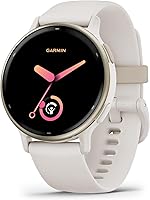
Garmin vivoactive 6 Review: Worth It? (October 2026)
The Garmin vivoactive 6 suits everyday health tracking and varied workouts, with an AMOLED display, up to 11 days of battery life and more than 80 built-in sports apps. Consider the vivoactive 5 for a similar core feature set or the Forerunner 165 if running is your main focus.
On this page (7 sections)
The Garmin vivoactive 6 suits everyday health tracking and varied workouts, with an AMOLED display, up to 11 days of battery life in smartwatch mode and more than 80 built-in sports apps. It combines sleep and energy insights with activity tools, so it can work for someone who wants one watch for daily routines and exercise.
Its main choice is how much activity variety and guidance you want. The vivoactive 5 covers core wellness features, while the Forerunner 165 puts more emphasis on running plans and training feedback.
Garmin vivoactive 6 review: what stands out?
The vivoactive 6 stands out for its broad activity menu and health features in a daily-wear smartwatch. Garmin includes sleep scoring and coaching, automatic nap detection, Body Battery energy monitoring and more than 80 indoor and GPS sports apps.
Garmin vivoactive 6 42mm: Best for varied daily workouts

- 42mm case
- AMOLED display
- Up to 11 days in smartwatch mode
- More than 80 built-in sports apps
A wellness-focused Garmin with sleep coaching, nap detection, Body Battery insights and a broad choice of indoor and GPS sports apps.
Pros
- More than 80 built-in sports apps
- Sleep score, coaching and automatic nap detection
- Daily suggested walking workouts
- Up to 11 days of battery life in smartwatch mode
Cons
- Health metrics are estimates, not medical measurements
- Some connected features require a paired smartphone
- Garmin Pay requires a supported country and payment network
Body Battery combines signals such as sleep, naps, stress and workouts to estimate energy levels. Sleep tools include a sleep score, personalized coaching and HRV status; Garmin describes these metrics as estimates, so use them as general context rather than medical measurements.
The smart wake alarm gently vibrates during a suggested wake window. Daily suggested workouts focus on walking, while animated workouts cover cardio, yoga, strength, HIIT and Pilates.
The watch also supports wrist-based heart rate, stress tracking, fitness age, menstrual cycle and pregnancy tracking, and meditation features. Those functions make it more than a step counter, though the amount of health information may feel like more than you need if you mainly want basic notifications.
Who should choose the vivoactive 6?
Choose the vivoactive 6 if you want wellness tracking and a wide mix of activities without centering your purchase on a single sport. Walking, cycling, swimming, HIIT and golf are among the activities named for its built-in apps.
It also fits people who like prompts to shape a routine. Suggested walking workouts, sleep coaching and automatic nap detection give you information and ideas to consider, rather than requiring you to plan every session yourself.
If you are comparing different Garmin families, use this Garmin watch sorter to narrow the options by how you plan to wear and use a watch. For everyday walking and general wear, our guide to Garmin watches for everyday use compares other options in that part of the lineup.
How does the vivoactive 6 compare with the vivoactive 5?
The vivoactive 6 and vivoactive 5 share AMOLED screens, sleep tools and a stated maximum of 11 days in smartwatch mode. The main difference in the provided activity details is breadth: Garmin lists more than 80 built-in sports apps for the 6 and more than 30 for the 5.
Garmin vivoactive 5 42mm: Best for a lower feature count

- 42mm case
- AMOLED display
- Up to 11 days in smartwatch mode
- More than 30 built-in sports apps
A close alternative with the same stated maximum smartwatch-mode battery life and core wellness tools, plus wheelchair mode.
Pros
- Sleep score, coaching and nap detection
- Wheelchair mode tracks pushes rather than steps
- Music storage and supported streaming playlists
- Up to 11 days of battery life in smartwatch mode
Cons
- More than 30 built-in sports apps, fewer than the vivoactive 6
- Always-on display mode is stated at up to 5 days
Both watches include Body Battery energy monitoring, sleep coaching and automatic nap detection. The vivoactive 5 also has wheelchair mode, which tracks pushes rather than steps and includes push and handcycle activities.
Choose the 6 if you want its wider app selection and walking suggestions. Choose the 5 if its activity set covers your needs, or if wheelchair mode is a useful part of your decision.
See our full Garmin vivoactive 5 vs 6 comparison for a closer look at the differences.
Is the vivoactive 6 a good running watch?
The vivoactive 6 can support running as part of a mixed fitness routine, but the Forerunner 165 is the more focused choice for run training. It offers built-in GPS for pace and distance, daily suggested workouts that adapt to performance and recovery, and Garmin Coach and race adaptive training plans.
Garmin Forerunner 165: Best for running plans

- 43mm case
- AMOLED touchscreen with button controls
- Built-in GPS
- Up to 11 days in smartwatch mode
A running-focused alternative with built-in GPS, adaptive race plans, training effect and recovery time.
Pros
- Built-in GPS for pace and distance
- Daily suggested workouts adapt to performance and recovery
- Traditional button controls alongside a touchscreen
- Up to 19 hours in GPS mode
Cons
- Running is its clearest focus
- Up to 11 days applies to smartwatch mode, not GPS mode
The Forerunner 165 also includes training effect and recovery time, plus a morning report with sleep, recovery and training outlook. Its display combines an AMOLED touchscreen with traditional button controls.
For someone who mostly walks, does strength sessions or switches between several activities, the vivoactive 6's broader wellness framing may suit better. If preparing for a race is the main goal, compare the Forerunner's training features with the tools you want to use each week.
When is the Venu 4 worth comparing?
Compare the Venu 4 if you want additional health context and a stainless steel design. The 41mm model offers health status, sleep alignment, more than 80 built-in sports apps and up to 10 days of battery life.
Garmin Venu 4 41mm: Best for added health context

- 41mm case
- AMOLED display
- Up to 10 days of battery life
- Health status and sleep alignment
A smaller Garmin option with health status, sleep alignment, a stainless steel design and more than 80 built-in sports apps.
Pros
- Health status checks changes in key health data
- Sleep alignment uses circadian rhythm
- More than 80 built-in sports apps
- Can make and take calls when paired to a smartphone
Cons
- Up to 10 days of battery life, less than the vivoactive 6's stated maximum
- Some health data and Pulse Ox readings have limits and are estimates
Its health status feature looks for changes in measures such as heart rate, HRV and skin temperature that could indicate added stress to your body. Sleep alignment adds context about your sleep timing, while custom behavior logs can help you review how choices such as caffeine or alcohol may relate to sleep, stress and HRV.
The Venu 4 can make and take calls when paired with a smartphone. For more details on that model, read our Garmin Venu 4 review.
What are the main trade-offs?
The vivoactive 6's health features are estimates, and their value depends on whether you will use the information to guide everyday choices. A sleep score or energy estimate can add context, but neither is a diagnosis or a substitute for medical advice.
Some functions depend on a phone connection. Garmin says the watch can show texts, emails and other smart notifications when paired with a smartphone; supported Garmin Pay availability depends on country and payment network.
The vivoactive 6 includes music storage and Garmin Pay among its connectivity features. Confirm that the services and payment support you need work where you live before treating them as part of your buying decision.
How should you decide?
Pick the vivoactive 6 for varied daily workouts and wellness tools, the vivoactive 5 for a similar core feature set with wheelchair mode, the Forerunner 165 for running plans, or the Venu 4 for added health context and stainless steel design. The best fit depends on which features match your routine, rather than the largest feature list.
For more buying context, start with our smartwatch buying guide to compare the basics, then use the Garmin lineup links above to focus on the features you expect to use.
Frequently asked questions
Is the Garmin vivoactive 6 good for everyday use?
The Garmin vivoactive 6 suits everyday wear if you want health tracking, sleep insights and varied activities in one watch. It offers an AMOLED display, up to 11 days of battery life in smartwatch mode, notifications when paired to a phone and more than 80 built-in sports apps.
Its health metrics are estimates, not medical readings.
How many sports apps does the vivoactive 6 have?
The vivoactive 6 has more than 80 built-in indoor and GPS sports apps, including walking, running, cycling, HIIT, mobility, swimming and golf. It also offers personalized daily suggested walking workouts.
Check whether your preferred activities are included before choosing it, especially if you need a specific training mode.
Should I get the vivoactive 6 or vivoactive 5?
Choose the vivoactive 6 if its more than 80 built-in sports apps and personalized walking workouts fit your routine. The vivoactive 5 has more than 30 apps, the same stated maximum of 11 days in smartwatch mode and wheelchair mode that tracks pushes rather than steps.
Compare the features you expect to use.
Is the vivoactive 6 a running watch?
The vivoactive 6 includes running among its built-in sports apps and offers training features such as workout benefit and recovery time. For a stronger running focus, the Forerunner 165 adds built-in GPS for pace and distance, race adaptive training plans and more than 25 activity profiles.