Amazfit Bip 6 vs Fitbit Charge 6: Which to Buy? (November 2026)
Buy the Fitbit Charge 6 for fitness tracking, Google apps and training guidance. Pick the Amazfit Bip 6 for its big AMOLED screen and two-week battery. In this Amazfit Bip 6 vs Fitbit Charge 6 comparison, the Charge 6 wins on features and the Bip 6 wins on display and time between charges.
On this page (13 sections)
- Amazfit Bip 6 vs Fitbit Charge 6: which should you buy?
- Side by side: Amazfit Bip 6 vs Fitbit Charge 6
- Display: does the bigger Bip 6 screen matter?
- Battery life: how often will you charge each one?
- Fitness tracking: which one pushes you harder?
- GPS and maps: how do they differ on the move?
- Smart features: what do the Google tools add?
- Design and comfort: which one suits all-day wear?
- Phone compatibility: which works better with your phone?
- Who should buy the Amazfit Bip 6?
- Who should buy the Fitbit Charge 6?
- How we compared these two trackers
- Verdict: Amazfit Bip 6 vs Fitbit Charge 6
Buy the Fitbit Charge 6 for fitness tracking, Google apps and training guidance. Pick the Amazfit Bip 6 for its big AMOLED screen and two-week battery.
In this Amazfit Bip 6 vs Fitbit Charge 6 comparison, the Charge 6 wins on features and the Bip 6 wins on display and time between charges.
The Charge 6 carries Google Maps, Google Wallet and YouTube Music controls, tracks more than 40 exercise modes, and adds a six-month Fitbit Premium trial. The Bip 6 puts a 1.97-inch AMOLED screen on your wrist and runs up to 14 days per charge.
Both sit in the smartwatch category. This comparison sticks to what the specs and features say about each one.


Amazfit Bip 6 vs Fitbit Charge 6: which should you buy?
Most readers should buy the Fitbit Charge 6. It brings more fitness tools and Google services, and those features matter more day to day than a larger screen.
The Charge 6 wins on training depth. Its 40+ exercise modes cover gym work, cycling and rowing, and its heart rate sensor is built for vigorous sessions.
The Bip 6 wins on how it looks and how long it runs. Its 1.97-inch AMOLED display stays readable in bright sun, and Amazfit claims up to 14 days of battery life.
Choose the Bip 6 if you mostly want steps, notifications, sleep and an easy-to-read screen. Choose the Charge 6 if you want guided workouts, Google tools and deeper health data.
Our Amazfit Bip 6 review goes deeper on the screen and battery if that side of the choice is pulling at you.
Side by side: Amazfit Bip 6 vs Fitbit Charge 6
The two trackers differ most in display, battery and smart features. Here is how the main specs line up.
| Product | Best for | Display | GPS | Bands in box | Our score |
|---|---|---|---|---|---|
| Fitbit Charge 6 Fitness Tracker Watch | fitness tracking | Color touchscreen | Built-in | Small and large silicone | 9.4 |
| Amazfit Bip 6 | display and battery | 1.97 in AMOLED | 7.8 |
The Charge 6's display handles touch input and adds Google services. The Bip 6 uses a 1.97-inch AMOLED panel and lists up to 14 days of battery life.
Both have built-in GPS, and the Bip 6 also supports free downloadable maps and five satellite systems for faster locks.
The Charge 6 comes as a bundle with small and large bands, a charging cable, a wall adapter and two screen protectors. The Bip 6 arrives with its watch and a magnetic charging base.
What the comparison table does not settle
Specs tell you what each tracker offers, not how it feels on your wrist. The Charge 6's band bundle gives you both sizes; the Bip 6 has a 22 mm silicone band with a buckle, so check the fit before you order.
Check your phone's version too. Amazfit lists Android 7.0+ and iOS 14.0+, so a very old phone may not pair.
Display: does the bigger Bip 6 screen matter?
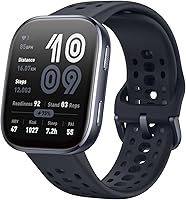
The Bip 6 wins this round. Its 1.97-inch AMOLED display is the larger, brighter panel, and Amazfit says data stays easy to read in bright sunlight.
That matters when you glance at your wrist mid-run or check a message in daylight. AMOLED also makes colors look richer than a plain color screen.
The Charge 6's display is smaller and built for quick reads of heart rate and exercise stats, not for watching anything.
Screen size is a real trade-off, though. A larger panel can make the watch feel bulkier, so it may suit a bigger wrist better than a small one.
If you check stats often and dislike squinting, the Bip 6 is the better tracker. If you only glance at the time and step count, the Charge 6's screen does the job.
Battery life: how often will you charge each one?
The Bip 6 wins on stated battery life. Amazfit claims up to 14 days per charge, which means roughly two weeks between sessions for typical use.
The Charge 6 does not give a day figure. Its feature load is heavier, since Google apps, music controls and more exercise modes all draw power.
Treat 14 days as Amazfit's claim, not a guarantee, since GPS runs, screen brightness and notifications shorten it.
Charging habits decide this for many people. If plugging in a tracker nightly feels like a chore, the Bip 6 removes that routine.
The Charge 6 bundle includes a 3.3-foot charging cable and a wall adapter, so you can charge it straight from a socket.
Keep each cable with its own tracker. Our guide to the best Amazfit watches covers the Bip line's charging setup alongside the T-Rex models.
Fitness tracking: which one pushes you harder?
The Fitbit Charge 6 wins for structured training. Its 40+ exercise modes cover the gym and the road, and Fitbit says the heart rate sensor is up to 60% more accurate during vigorous activities like HIIT, spinning and rowing.
Active Zone Minutes tell you how long you spent in target heart rate zones.
The Bip 6 lists 140+ workout modes, including HYROX Race and Strength Training. It also adds personalized AI coaching and 50 m water resistance.
More modes doesn't always mean better coaching, though. The Charge 6 pairs its modes with Fitbit Premium's guided sessions and a Daily Readiness Score.
The Charge 6 also adds an ECG app for heart rhythm notifications and an EDA sensor for stress response, and its Sleep Score turns the night into one number. The Bip 6 monitors heart rate, sleep, blood oxygen and stress around the clock, but it shows the raw picture rather than scoring your sleep.
If you want your tracker to interpret the data, the Charge 6 does more of that work.
GPS and maps: how do they differ on the move?
Both track outdoor routes with built-in GPS; the Bip 6 adds downloadable maps. The Charge 6 adds Google Maps directions instead.
Amazfit says the Bip 6 supports free downloadable maps with turn-by-turn directions, and five satellite systems help it lock on fast and keep a steady track. The Charge 6 uses Google Maps for turn-by-turn directions during runs or rides, so you see the next turn without pulling out your phone.
That's the key split. The Bip 6 stores maps on the watch for routes you plan.
The Charge 6 leans on Google Maps to guide you in real time. Neither replaces a dedicated bike computer for serious navigation, but for a daily jog or a weekend ride, both do the basic job.
Pick the Bip 6 if you run unfamiliar routes and like seeing the path on your wrist. Pick the Charge 6 if you want simple turn prompts while you run in town.
Smart features: what do the Google tools add?
The Fitbit Charge 6 wins this section easily. It's the only one of the two with Google built in, and that changes what the tracker can do away from workouts.
Google Wallet lets you tap to pay for a snack or a coffee without your phone. YouTube Music controls let you change tracks from your wrist.
Google Maps gives you directions, as covered above. Fitbit also includes a six-month Premium trial with guided workouts and the Daily Readiness Score.
The Bip 6 handles the basics well. It shows notifications, phone calls and text messages, and it pairs over Bluetooth with Android and iOS.
If you carry an Android phone and pay for things on the go, the Charge 6's Google tools are genuinely useful. If you just want notifications, the Bip 6 covers it.
One caveat from Fitbit: Google apps and services aren't available in all countries or languages. Check availability where you live before you count on Wallet or Maps.
Design and comfort: which one suits all-day wear?
The Bip 6 is the lighter-looking option on paper, thanks to its aluminum build and larger face. The Charge 6 is the more understated tracker.
Amazfit describes the Bip 6's lightweight aluminum body as stylish and tough enough for workouts. The 22 mm silicone band uses a standard buckle.
The Charge 6 comes in an Obsidian and black aluminum finish with a push-button deployant clasp, and its band bundle gives you a small and a large silicone strap.
Comfort depends on wrist size. A larger AMOLED panel like the Bip 6's can crowd a slim wrist, while the Charge 6's smaller body may sit more neatly.
The Charge 6 bundle includes both band sizes, so you can swap without buying extra. The Bip 6 ships with one band, so check the fit before you order.
Phone compatibility: which works better with your phone?
Both trackers pair with Android and iOS phones. The Bip 6 lists Android 7.0+ and iOS 14.0+, so it covers most modern phones.
The Charge 6 works with smartphones over Bluetooth and lists common models like the Galaxy S22 Ultra and Pixel 7 Pro.
Its Google tools make more sense on Android. On an iPhone, the Charge 6 still tracks workouts and shows notifications, but Google Maps and Wallet lose some of their pull without an Android phone.
If you're weighing an iPhone setup, our roundup of the best smartwatches for iPhone besides Apple Watch covers how other brands handle pairing.
iPhone owners who want fitness tracking without Apple Watch should compare both on features, not just phone brand. The Bip 6's price tier makes it the easier casual pick; the Charge 6 justifies more only if you'll use its tools.
Who should buy the Amazfit Bip 6?
Buy the Amazfit Bip 6 if a big, bright screen and long battery life top your list. It's the tracker for people who wear a watch all day and charge it rarely.
It suits casual movers who want steps, sleep, stress and blood oxygen readings without a subscription. The 50 m water resistance covers pool swims and showers.
The 140+ workout modes are more than most people will use, and HYROX Race and Strength Training are there if you want them.
It's also the easier pick if you want maps on the watch itself. Downloadable maps and five satellite systems suit runners who plan routes.
Skip it if guided workouts and scored recovery are what keep you training. The Bip 6 shows the data; it doesn't coach you through a session the way Fitbit Premium does.
Who should buy the Fitbit Charge 6?
Buy the Fitbit Charge 6 if fitness tracking and smart features are the point. Its 40+ exercise modes, ECG app and stress sensor make it the more capable health tracker.
It's the right choice for anyone who trains hard and wants feedback. Active Zone Minutes and the Daily Readiness Score turn sessions and recovery into decisions.
Android users get the most from it, since Google Maps directions, tap-to-pay with Wallet and YouTube Music controls all work through the phone in your pocket.
The six-month Premium trial lets you try guided workouts and recovery scores before you decide whether to keep paying. Basic tracking keeps working either way.
Skip it if battery life and screen size matter more than features, since charging more often is the price of everything the Charge 6 does.
If you train three or more times a week and carry an Android phone, the Charge 6 earns its keep. If your watch is mostly a step counter and notification screen, the Bip 6 covers it with room to spare.
How we compared these two trackers
Our score weighs specs, features and how well each tracker fits what a daily-wear shopper wants. The Charge 6 scores 9.4 and the Bip 6 scores 7.8.
The Charge 6's lead comes from its feature depth. Google apps, 40+ exercise modes and health tools like ECG and stress sensing push it ahead for fitness-focused buyers.
The Bip 6's 7.8 reflects a narrower job done well, with strong display and battery but lighter smart features and training guidance.
They're based on the specs and features each brand publishes and the needs of the typical daily-wear buyer.
If you want the wider picture on the Bip line, our Amazfit vs Garmin comparison shows how Amazfit stacks up against another fitness-focused brand.
Verdict: Amazfit Bip 6 vs Fitbit Charge 6
The Fitbit Charge 6 is the better buy for most people. It's the stronger fitness tracker, with Google apps, 40+ exercise modes and health tools that turn your data into guidance.
The Amazfit Bip 6 is the better fit for screen-first and battery-first buyers. Its 1.97-inch AMOLED display and up to 14 days of battery life make it a low-maintenance daily wear.
Here's the decision rule. Pick the Charge 6 if you train regularly and carry an Android phone.
Pick the Bip 6 if you want a big screen and rare charging over coaching and smart extras. Either way, you're getting a capable fitness tracker.
The Amazfit Bip 6 vs Fitbit Charge 6 choice comes down to whether you value features or everyday ease more.
Frequently asked questions
Which has longer battery life, the Amazfit Bip 6 or Fitbit Charge 6?
Amazfit says the Bip 6 lasts up to 14 days per charge. The Charge 6 does not give a day figure, so judge it on its feature load rather than a number.
The Bip 6 is the clearer choice if charging often is your main annoyance.
Does the Fitbit Charge 6 work without a subscription?
Yes. Heart rate, steps, sleep score, GPS workouts and Google Maps directions all work without paying.
Fitbit Premium adds guided workouts and the Daily Readiness Score.
A free six-month trial is included, and Premium becomes optional after it ends.
Can the Amazfit Bip 6 show maps while running?
Yes. Amazfit says the Bip 6 supports free downloadable maps with turn-by-turn directions, backed by five satellite systems for a fast GPS lock.
That makes it useful for routes where you would rather glance at your wrist than your phone.
Which tracker is better for iPhone users?
Both pair with iPhones, so the choice rests on features rather than phone brand. The Charge 6 brings Google Maps and Wallet, which are more useful when you carry an Android phone. iPhone owners who mostly want notifications and workouts can save with the Bip 6.
Is the Amazfit Bip 6 waterproof?
Amazfit rates the Bip 6 at 50 m water resistance, enough for pool swims and showers. The Charge 6 is built for everyday wear and exercise.
Treat 50 m as swim-safe rather than dive-proof.